
Hey, silhouette seekers. Let’s talk about the dress that looks relaxed at first glance, then quietly rearranges the whole room. (Video Summary)
The drop-waist dress is having a very real moment in 2026, and honestly, it makes sense. After seasons of high waists, snatched waists, corset waists, belt-everything waists, and outfits that basically asked your midsection to clock in for overtime, the drop-waist silhouette feels like a stylish little rebellion.
It does not cling to the natural waist. It does not beg for an hourglass shape. It does not announce, “Look how tiny my middle is.” Instead, it lowers the visual line of the dress toward the hips, elongates the torso, and lets the shape fall in a way that feels cooler, looser, and a little less predictable.
That is why it is low-key dangerous.
Not loud dangerous. Not “red mini dress at midnight” dangerous. More like, “I know exactly what I am doing, but I refuse to explain the proportions” dangerous.
What exactly is a drop-waist dress?
A drop-waist dress is a dress where the seam, shaping, or visual break sits below the natural waist, often closer to the hips. Instead of creating the classic waistline right at the smallest part of the torso, the dress stretches the body visually before releasing into a skirt, flare, pleat, bubble, ruffle, or softer drape.
Think 1920s flapper energy, but updated. Less costume party. More fashion editor walking past you without checking if you understood the outfit.
The modern version can show up in several ways. There are sleek drop-waist maxis, playful drop-waist minis, bubble-hem dresses, tank-style dresses with a low seam, corset-inspired shapes with a dipped waist, and relaxed styles that almost feel like long tops over skirts. Some are romantic. Some are minimal. Some are weird in the best possible way.
The key is that the silhouette changes where your eye lands. That is the whole trick.
Why it feels fresh right now
The drop-waist dress feels fresh because it does not follow the obvious bodycon formula. A fitted mini says, “Here is the shape.” A belted dress says, “Here is the waist.” A drop-waist dress says, “Look again.”
That second glance is powerful.
It creates a different kind of confidence because it is not trying to prove the body underneath. It creates mood through proportion. The torso feels longer. The skirt feels lower. The whole dress can look relaxed, elegant, cool, or slightly offbeat depending on the fabric and styling.
That is also why it feels so modern. Fashion in 2026 is not only about showing the body. It is about playing with shape, ease, movement, and personality. The drop-waist dress fits perfectly into that conversation because it gives style without screaming for approval.
The mini version: cute, strange, and flirty
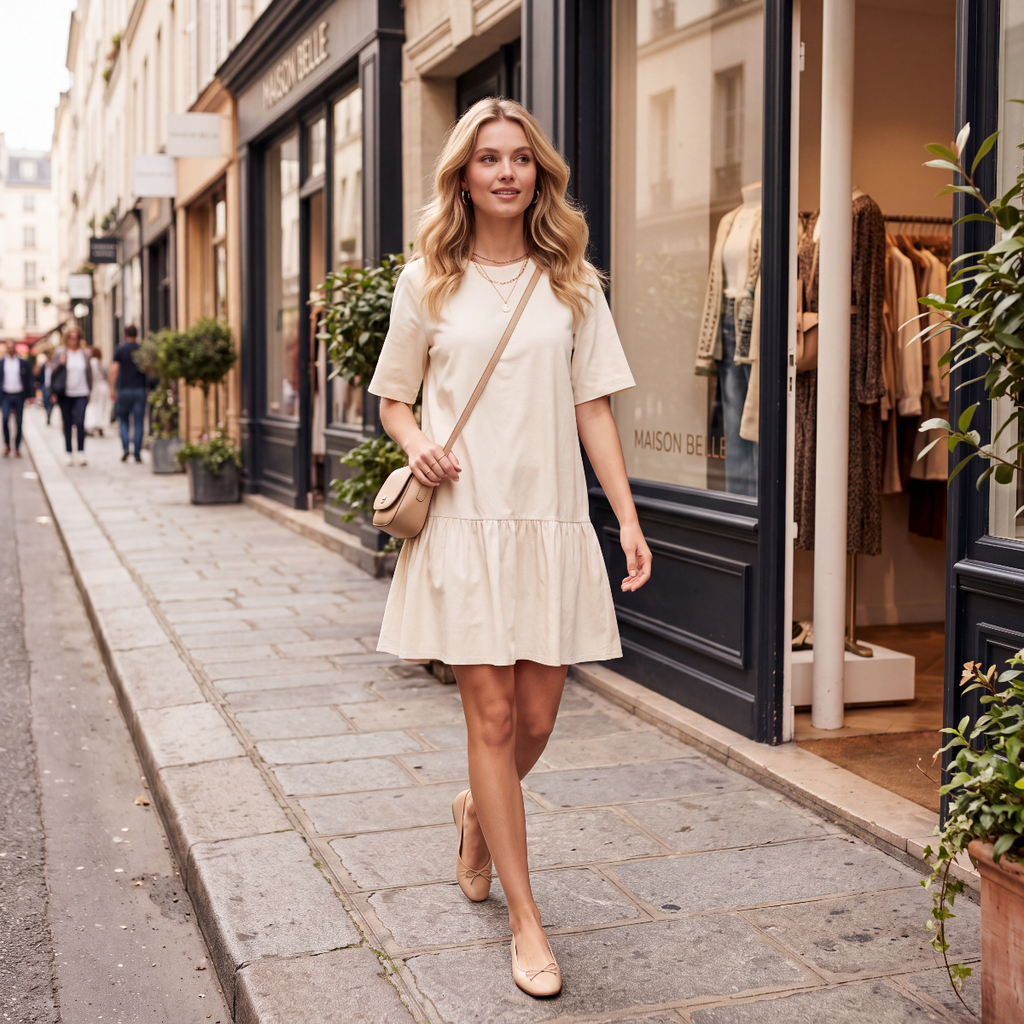
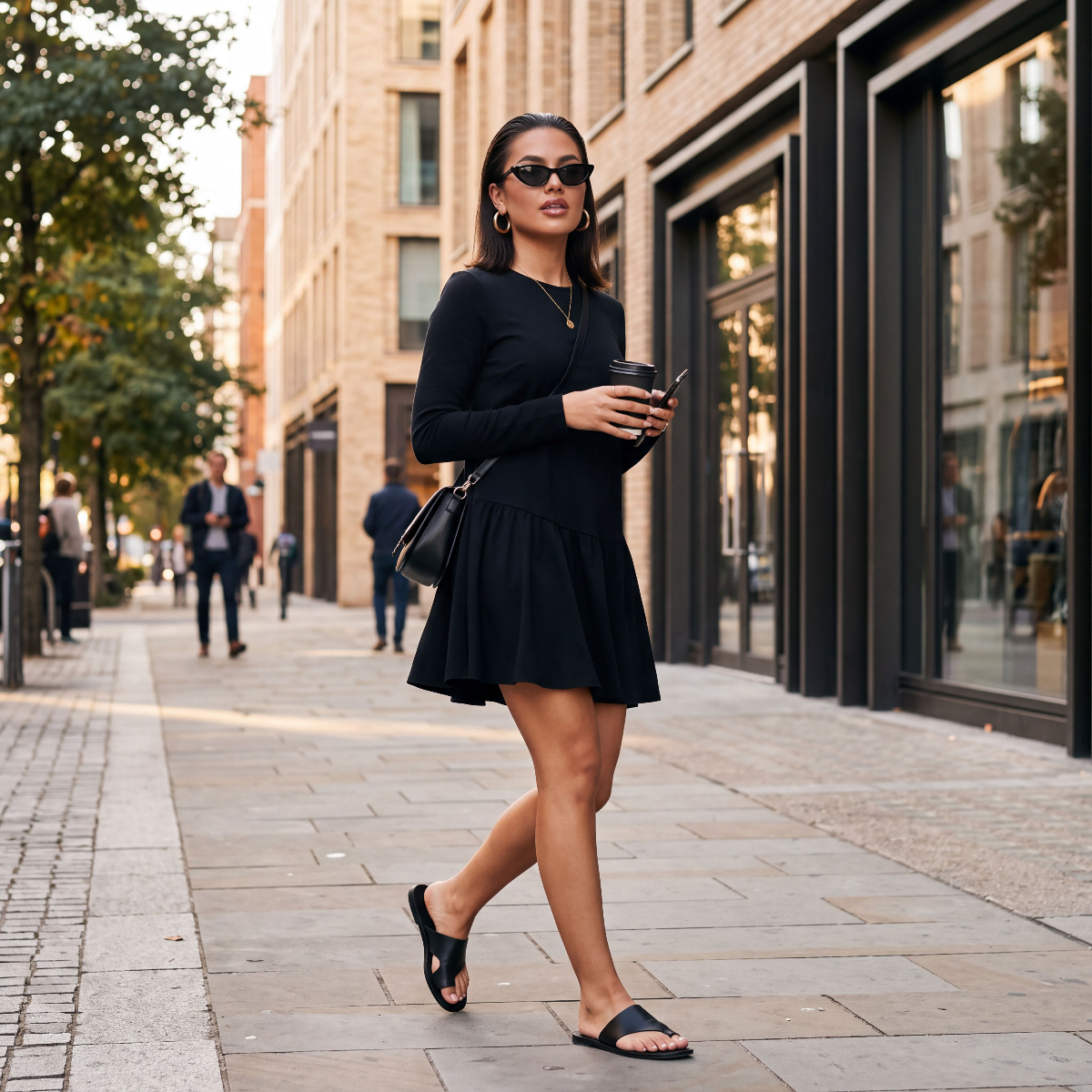
A drop-waist mini is probably the easiest entry point if you want the trend to feel playful. The lower seam creates that long-torso effect, while the short hem keeps the look young, flirty, and energetic.
This is where the silhouette gets really fun. A drop-waist mini can look sweet with ballet flats, sharp with ankle boots, casual with slim sneakers, or very “fashion person on vacation” with flat sandals and sunglasses.
The magic is in the contrast. The top of the dress can feel simple and almost straight, then the skirt gives movement near the hips. That little delay before the flare is what makes the dress feel interesting. It is cute, but not basic. Sweet, but not innocent. Easy, but not boring.
Style it with: slim sunglasses, gold hoops, a small shoulder bag, and shoes that keep the look light. If the dress has volume at the skirt, avoid bulky shoes unless you want the outfit to feel intentionally quirky.
The midi version: polished without trying too hard
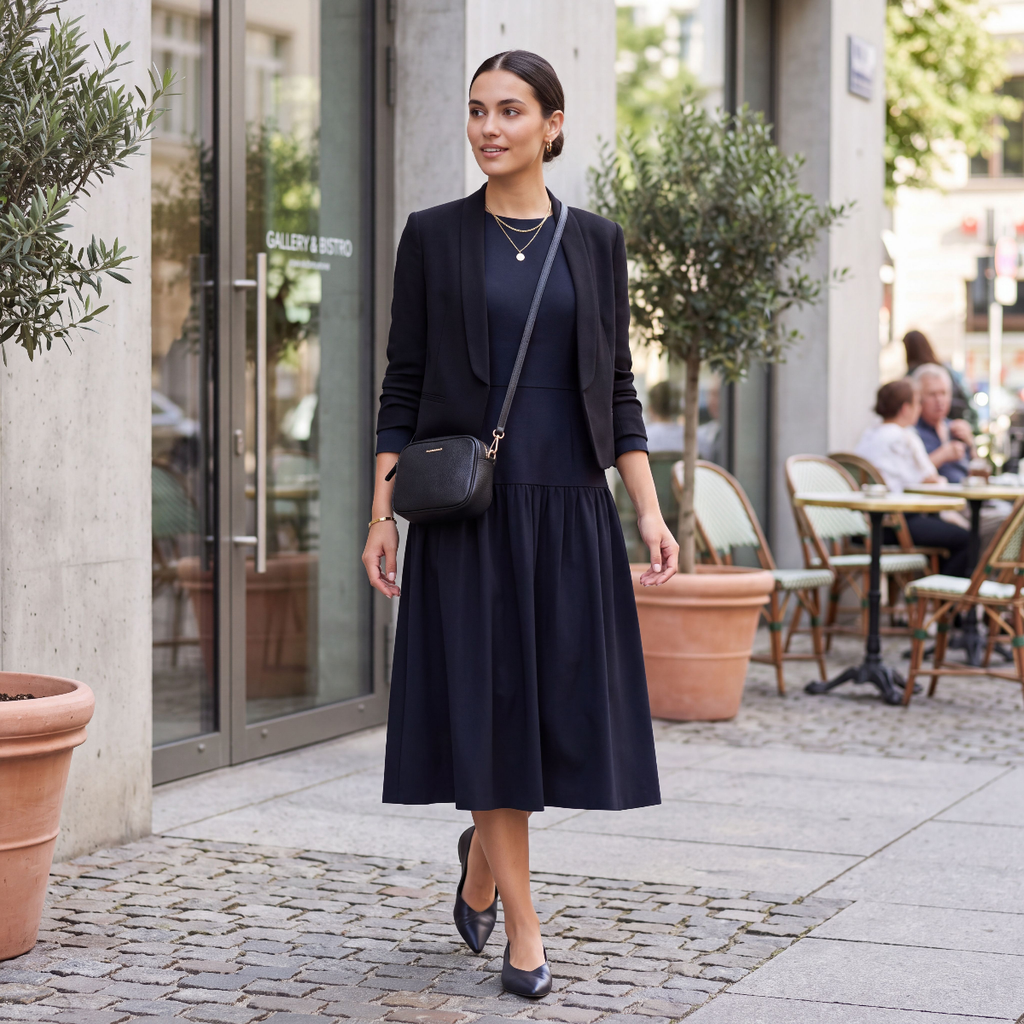
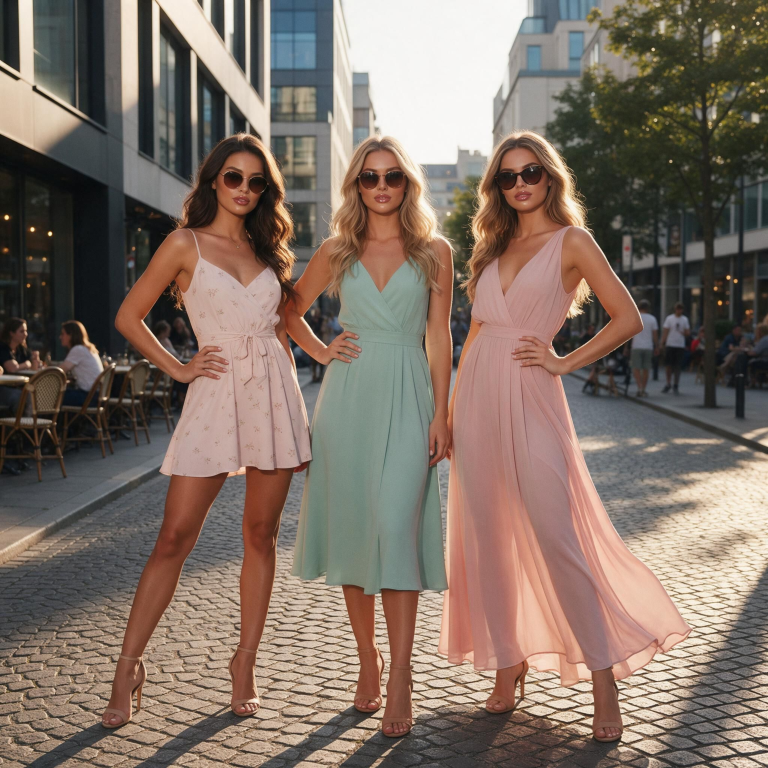
A drop-waist midi is where the silhouette starts to feel elegant. The longer length gives the dress more movement, and the lower waistline keeps it from looking too traditional.
This is a great option for readers who like polish but do not want the usual fitted-waist dress. A drop-waist midi can work for brunch, dinners, gallery events, vacation evenings, casual weddings, or any plan where you want to look stylish without looking like the dress is doing too much emotional labor.
A black drop-waist midi feels sleek and expensive. A white or cream version feels fresh and architectural. A soft pastel version feels romantic. A printed version can feel artsy if the accessories stay clean.
The midi drop-waist dress is especially good when the fabric has movement. Cotton poplin, satin, silk blends, lightweight knits, and crisp structured fabrics all create different moods. The wrong fabric can make the silhouette feel heavy, but the right fabric makes it look effortless.
Style it with: low heels, pointed flats, simple jewelry, a clean bag, and maybe a cropped jacket if you need structure up top.
The maxi version: soft drama with control
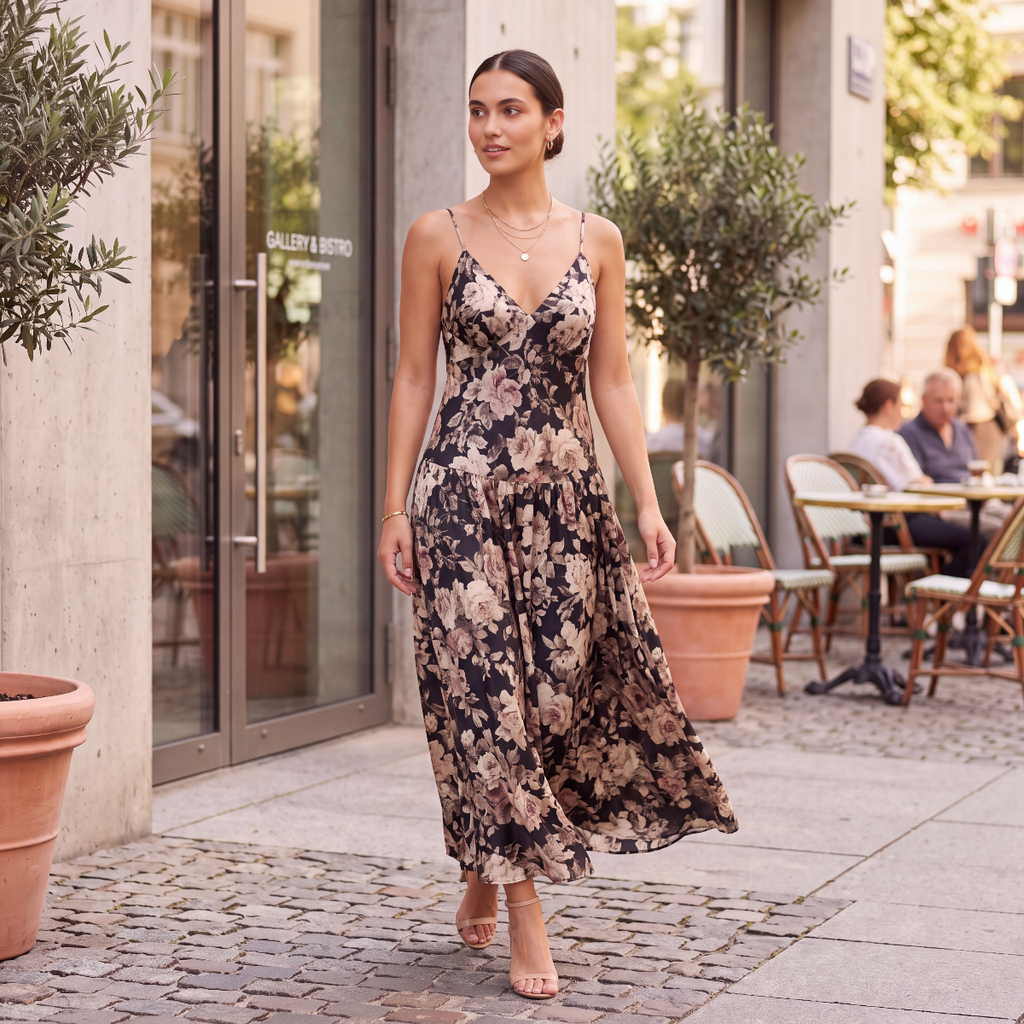
Now let’s talk about the drop-waist maxi, because this is where the silhouette gets dramatic.
A drop-waist maxi has presence. It has sweep. It can feel romantic, moody, modern, or slightly vintage depending on the styling. Because the waistline sits lower, the dress often gives this long, flowing effect that feels less “princess” and more “mysterious person at the hotel bar who knows things.”
That is a compliment.
The maxi version works best when the dress has movement but not too much bulk. A low seam plus a full skirt can be beautiful, but it needs balance. If the bottom has volume, keep the top cleaner. If the top has straps, ruching, or an interesting neckline, let the skirt stay softer.
A drop-waist maxi is perfect for resort dinners, summer events, fall layering, evening walks, date nights, or those rare moments when you want comfort and drama in the same outfit. It gives you room to move while still looking styled.
Style it with: barely-there heels, sleek flats, delicate jewelry, soft waves, or a strong lip. Let the dress have the atmosphere.
How to choose the right drop-waist fit
Here is where the drop-waist dress gets a little tricky, because the silhouette is powerful, but it is not one-size-fits-all in the way a simple bodycon or wrap dress might be. The drop waist changes where the eye lands, so fit matters.
Start with the seam placement. The dropped seam should sit somewhere around the upper hip or low hip, not awkwardly across the widest part of the body in a way that makes the dress pull, bunch, or flatten the shape. If the seam feels like it is fighting your hips, the dress is not wrong for you. That specific cut is wrong for you. Very different problem.
Next, check torso length. If you have a shorter torso, a very low drop waist may feel like it is dragging the whole outfit downward. Try a softer drop waist that sits only slightly below the natural waist, or choose a mini length to bring the leg line back into the look. If you have a longer torso, you can usually handle a more dramatic drop because the shape has more room to breathe.
Then look at the skirt volume. A drop-waist dress with a full skirt, bubble hem, pleats, or ruffles can be gorgeous, but the top needs enough structure to balance it. If the upper half is too loose and the lower half is too full, the whole dress can start looking like one long fabric sigh. A more fitted bodice, tank shape, corset-inspired top, or clean neckline helps the silhouette feel intentional.
Length also changes everything. A drop-waist mini feels playful and leggy, which makes it the easiest version for many people to style. A drop-waist midi can look elegant, but the hem should not hit at the heaviest part of the calf unless the shoe gives lift or shape. A drop-waist maxi brings drama, but it needs movement. If the fabric is too stiff and the seam is too low, the dress can feel heavy instead of graceful.
Fabric is the final check. Crisp cotton gives structure. Satin gives flow. Knit gives ease. Poplin gives shape. Heavy fabric gives drama, but it can also add bulk if the dress already has volume. If you are new to the trend, start with a fabric that moves but still holds its line.
Aria’s quick fit test: when you put it on, ask three questions. Does the seam land cleanly? Does the skirt move without swallowing you? Do the shoes help the proportion? If yes, the dress is working. If not, adjust the length, fabric, or styling before blaming your body.
Because the drop-waist dress is not about forcing yourself into a trend.
It is about finding the version that makes the proportion look deliberate.
The styling mistake to avoid
Do not try to force a drop-waist dress to behave like a regular waistline dress.
That means do not automatically belt it at the natural waist unless you are purposely changing the silhouette. Do not pile on too many heavy accessories. Do not panic because it does not create the same shape as your bodycon mini or belted midi.
The drop-waist dress is not here to snatch. It is here to shift the mood.
That is the point.
Once you stop asking it to be something else, it becomes much easier to style.
Why it is low-key dangerous
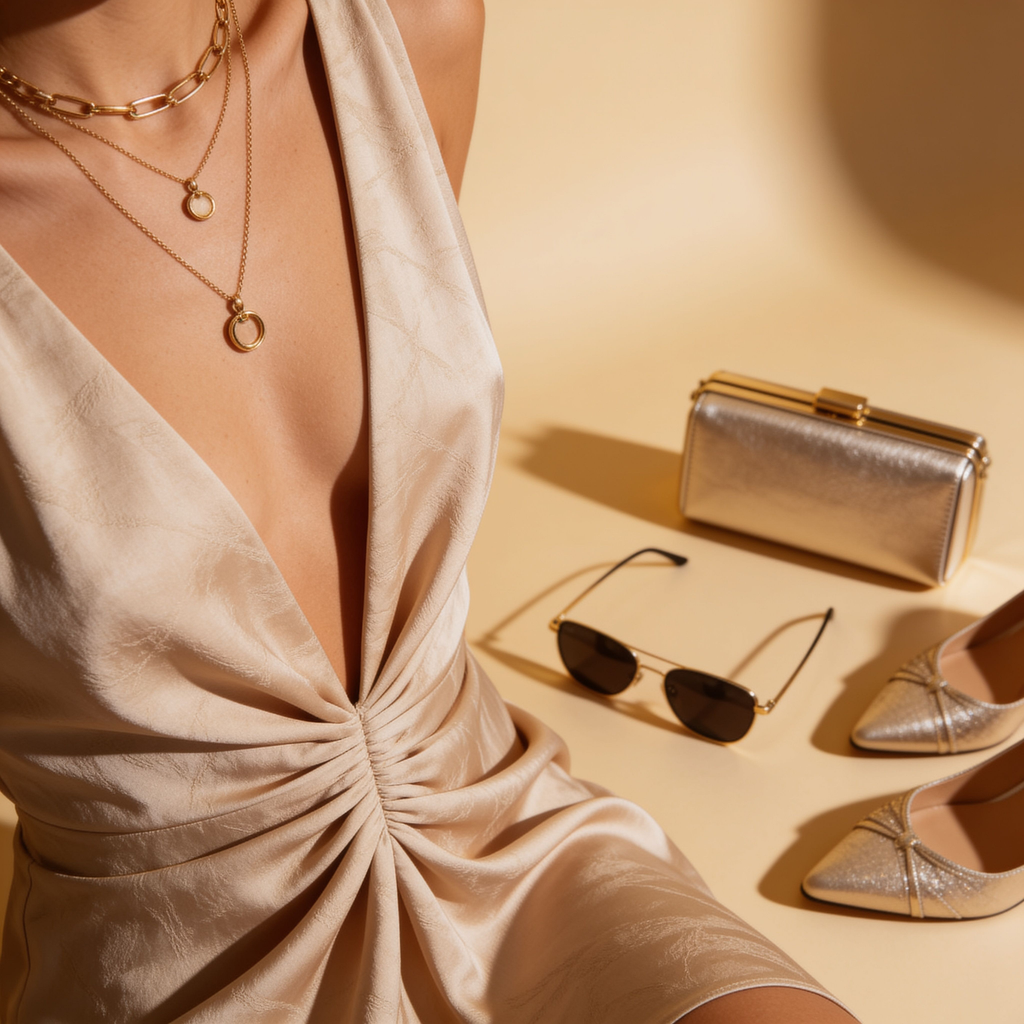
The drop-waist dress is dangerous because it refuses the obvious. It does not rely on tightness. It does not rely on a high slit. It does not rely on a dramatic neckline. It plays with proportion, and proportion is one of the smartest ways to make an outfit look expensive.
It is the kind of dress that makes people look twice because they cannot immediately sort it into a familiar category. Is it vintage? Minimal? Romantic? Weird? Chic? The answer is yes, depending on how you style it.
That kind of ambiguity is powerful.
The drop-waist dress says you understand fashion beyond “is it flattering?” It says you know shape can be interesting. It says you are not afraid of a silhouette that takes up space differently.
That is confidence.
Quiet confidence, but confidence.
Wrapping it up in Style
The drop-waist dress is one of 2026’s coolest silhouettes because it gives fashion something it desperately needs sometimes: a little mystery.
It is not the easiest dress in the room, and that is exactly why it works. It changes the proportions. It lowers the drama. It lengthens the torso. It lets the skirt move from a different place. It can be mini, midi, maxi, romantic, minimal, vintage-inspired, or completely modern.
Most importantly, it does not beg to be understood immediately.
So if you are tired of every dress doing the same waist-snatching routine, try the drop waist. Start with a mini if you want playful. Try a midi if you want polish. Go maxi if you want full soft drama. Keep the styling clean, the shoes intentional, and the accessories sharp enough to let the silhouette speak.
Because sometimes the most dangerous dress is not the tightest one.
It is the one that changes the shape of the conversation.
xoxo 💋✨
Aria 🖤👗🌙