
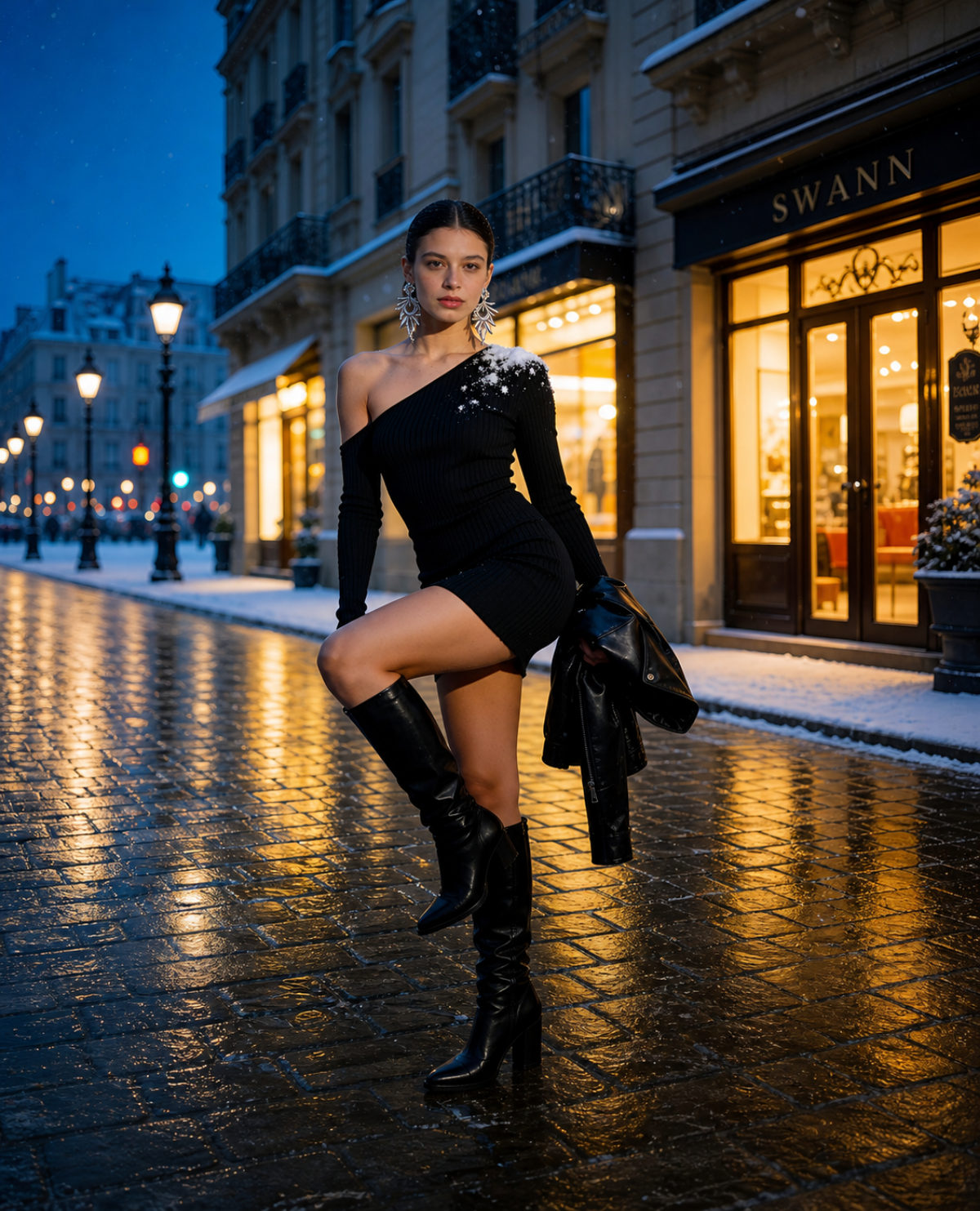

Hey, rule breakers. Apparently, fashion has decided that matching sides are optional, and honestly, it’s about time. Because who decided both shoulders needed the same amount of attention? (Video Summary)
One shoulder covered, one shoulder showing. A hemline that dips dramatically to one side. A skirt that wraps diagonally across the hips. A neckline that looks like it deliberately ignored the designer’s ruler.
Welcome to asymmetrical fashion, where being a little off-balance is precisely the point.
And before anyone suggests oversized sweaters and shapeless coats because winter is approaching, let’s establish something. Cold weather does not automatically require surrendering every curve, short hemline, or fabulous little dress in your closet.
Asymmetrical fashion gives fitted winter outfits an entirely different personality. We’re talking one-sleeve bodycon minis, angled micro skirts, sculpted knit dresses, diagonal cutouts, and unexpectedly sexy construction details.
Because sometimes the most interesting thing about an outfit is what doesn’t match.
Why perfectly imperfect looks so good
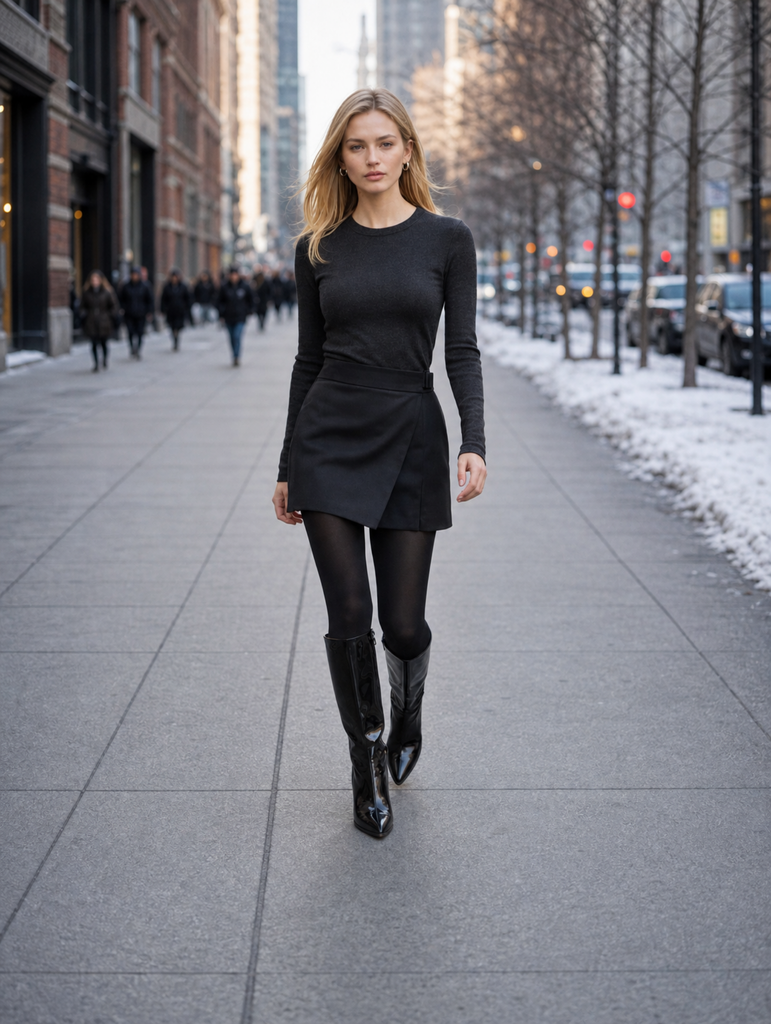
Symmetry is predictable. Both shoulders match. Both sides of the hemline agree. Everything is neatly balanced, behaving itself, and apparently very pleased about it.
Asymmetry disrupts that predictability.
An angled neckline draws attention across the shoulders. A diagonal skirt creates movement through the hips. An off-center drape gives a fitted dress dimension without adding unnecessary bulk.
That’s the beauty of the design. The garment creates visual interest through its construction rather than requiring accessories to manufacture excitement.
And we’re not alone in appreciating a little deliberate imbalance. Recent Seoul street-style reporting has highlighted wrapped and asymmetrical skirts, while Berlin’s fashion scene has embraced reconstructed garments and unconventional construction.
Different cities, different interpretations, but a similar idea: clothing becomes more interesting when designers stop following every traditional line.
One shoulder, maximum attitude
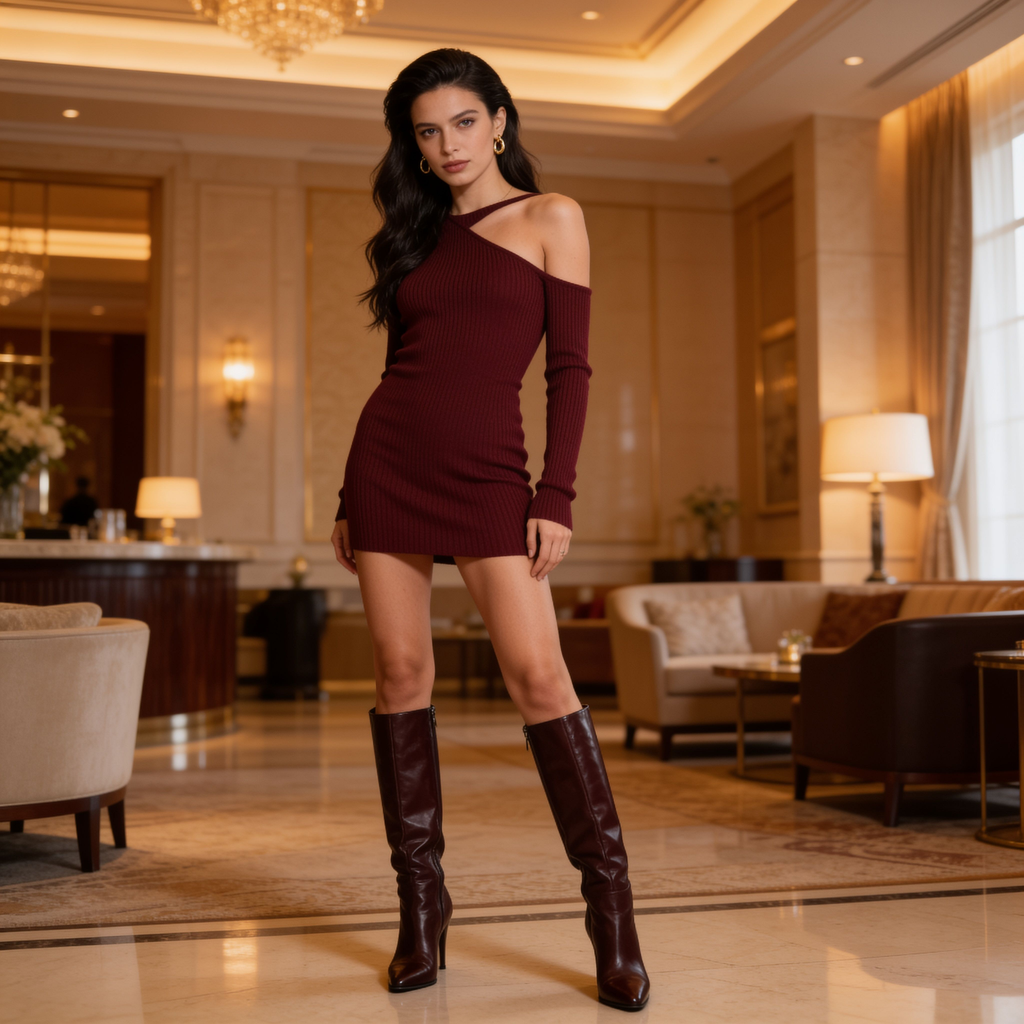
Let’s start with one of the easiest ways to embrace asymmetry: the one-shoulder mini dress.
There’s something effortlessly sexy about a fitted dress with one shoulder exposed and the other covered. It reveals just enough skin to feel daring while allowing the design to remain clean and sophisticated.
For colder weather, I especially love the one-sleeve version.
Picture a fitted black ribbed mini dress with one long sleeve, one bare shoulder, and a sharply angled neckline. Add sleek knee-high boots, silver earrings, and a cropped leather jacket for the trip outside.
The result? Winter styling without looking like you’ve been wrapped for shipping.
A burgundy or chocolate-brown one-shoulder knit mini can create a softer mood, while cobalt blue or deep red makes the silhouette impossible to ignore.
The important thing is choosing a neckline that sits securely. If you’re constantly pulling the dress back into position, the design isn’t doing its job.
When hemlines refuse to behave
Now let’s talk about asymmetrical mini skirts, because this is where things get particularly interesting.
A traditional mini skirt has one relatively consistent hemline. An asymmetrical mini takes that familiar shape and introduces an angle, overlapping panel, side drape, or deliberately uneven cut.
Suddenly, the skirt has movement and personality.
A fitted black wrap mini with a diagonal front panel can look incredible with a slim long-sleeve top and tall boots. A micro mini with an angled side hem feels playful with a fitted turtleneck. A satin asymmetrical skirt introduces fluid movement against a structured cropped jacket.
But here’s the trick: short and asymmetrical doesn’t have to mean accidentally revealing.
Look for secure wrap closures, properly anchored overlapping panels, and sufficient coverage when sitting or walking. Some designs include concealed shorts beneath the skirt, which can be especially useful for very short silhouettes.
A skirt can flirt without making you negotiate with gravity all evening.
The winter mini isn’t going anywhere
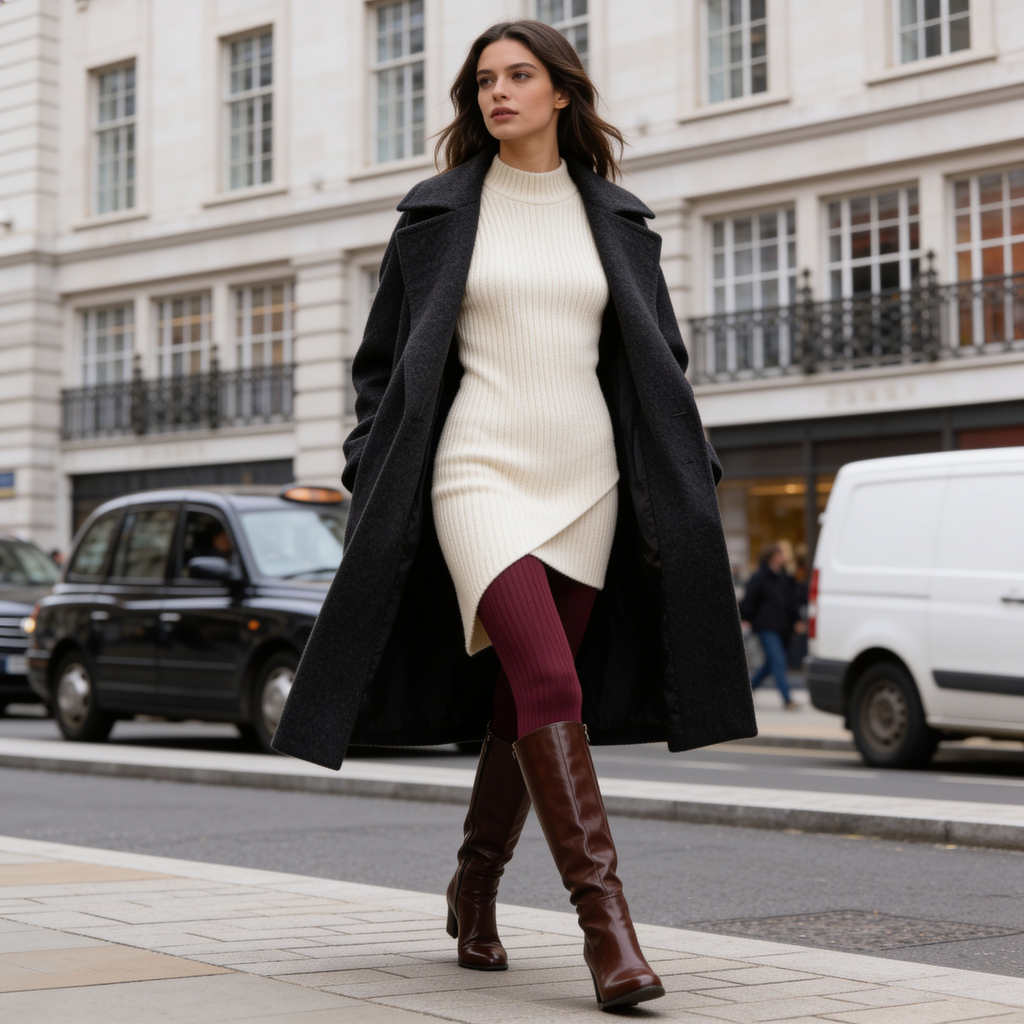
One of the biggest misconceptions about winter fashion is that looking warm and looking sexy are opposing goals.
They aren’t. You simply need better layering.
Start with a fitted asymmetrical knit mini dress. Add thermal tights in a finish that complements the outfit, then choose knee-high or over-the-knee boots.
For a particularly sleek appearance, sheer-look fleece-lined tights can provide additional warmth while preserving the illusion of lighter hosiery. Just remember that actual insulation varies, especially in freezing or windy conditions.
A cropped leather jacket can work during milder weather, while a substantial wool coat makes more sense when temperatures really drop.
And here’s an important styling detail: a longer coat over a short fitted dress can create a striking contrast when you’re outdoors. Once the coat comes off inside, the dress still gets its moment.
Recent London street-style coverage has also demonstrated how expressive tights, socks, and unexpected legwear can transform short silhouettes.
So consider burgundy tights beneath a black asymmetric mini, charcoal tights with a cream knit dress, or a carefully placed flash of cobalt against otherwise neutral clothing.
Winter legs do not have to be boring.
Diagonal details that change everything
Asymmetry isn’t limited to necklines and hemlines.
A strategically placed side cutout can transform a fitted dress. An off-center zipper can make a simple mini feel architectural. A single draped panel changes the way fabric moves against the body.
Even a twisted shoulder seam or an asymmetrical waist detail can give an otherwise straightforward outfit more character.
These designs are particularly effective on body-hugging silhouettes because the shape remains visible beneath the construction.
Think of a fitted charcoal mini dress with a diagonal waist seam and one subtle side cutout. It doesn’t need a dramatic print, oversized jewelry, or five competing accessories.
The design already has something to say.
And speaking of details, avoid confusing asymmetry with random decoration. A good asymmetrical piece should feel intentional, not like somebody cut the garment in half and ran out of fabric.
Fit matters more when the rules change
This is one trend where the fitting room deserves a little extra attention.
Because an asymmetrical garment has uneven lines or closures, poor fit can create pulling, twisting, or uncomfortable pressure in unexpected places.
With a one-shoulder dress, check whether the neckline stays secure when you raise your arms or bend forward.
With a wrap mini, walk several steps and sit down. Make sure the overlapping panels remain where they’re supposed to.
For dresses with diagonal ruching or draping, examine whether the fabric follows the intended line rather than bunching awkwardly at one hip.
And if a hemline is dramatically shorter on one side, check its length while moving, not just while posing in front of a mirror.
Fabric also matters. Ribbed knits and stretch jersey can provide a close fit with movement, while satin and structured woven fabrics may need more precise tailoring.
The goal isn’t simply to squeeze into the smallest possible silhouette.
It’s to find a fitted piece that moves comfortably and lets its unusual design shine.
How to keep the outfit looking intentional
The temptation with an unusual dress is to add even more unusual pieces.
Resist.
An asymmetrical mini dress already creates a focal point. Let the angled neckline, single sleeve, or diagonal hemline lead the outfit.
A fitted one-sleeve dress works beautifully with sleek boots and compact jewelry. A dramatic wrap mini can look sharper with a simple fitted top. An asymmetrical bodysuit paired with tailored short shorts creates a playful alternative to another mini dress.
And don’t underestimate monochromatic styling.
An all-black look featuring a fitted asymmetric top, tiny black skirt, dark tights, and sculpted boots allows the construction to stand out without relying on loud colors.
For something bolder, choose one standout color. A deep-plum asymmetrical mini against black outerwear? Absolutely. A bright-red one-sleeve dress with dark boots? Now we’re getting somewhere.
Let the uneven design be the interesting part.
Where to wear it this winter
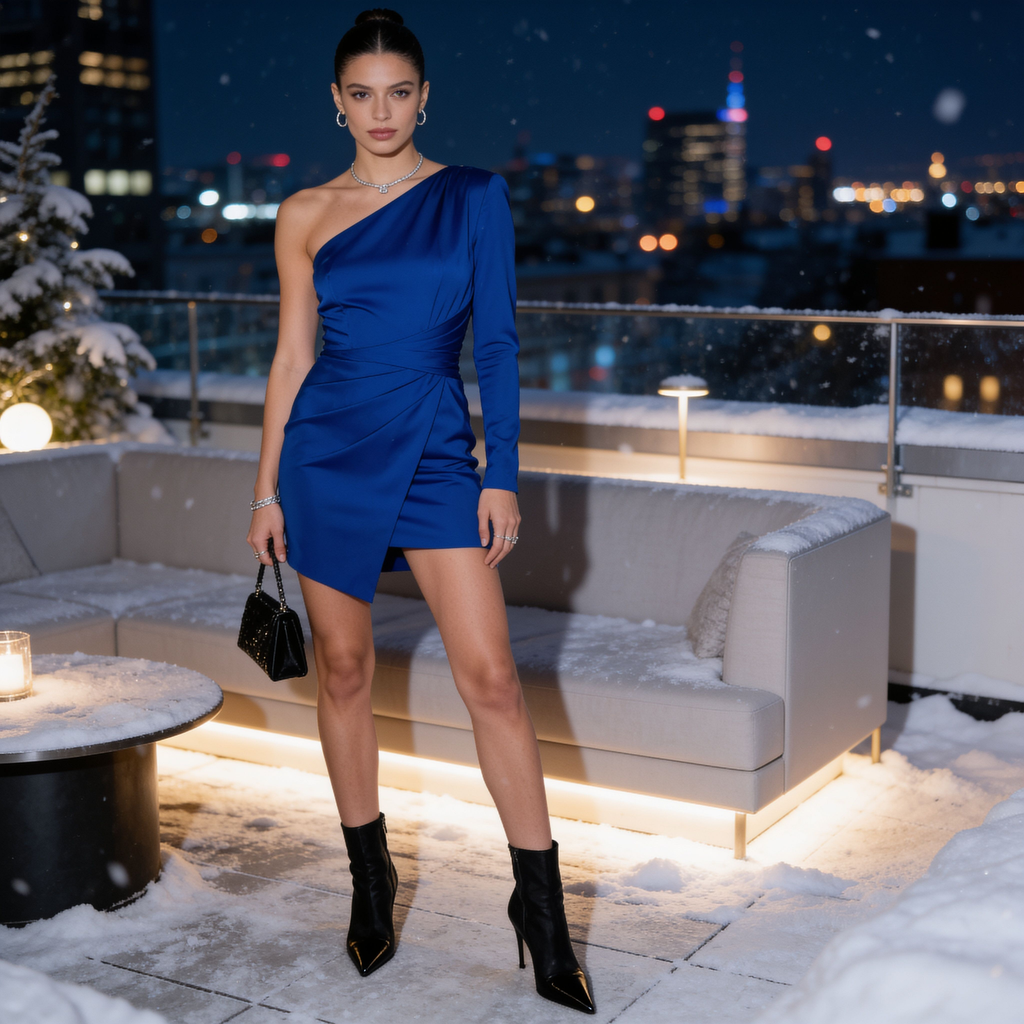
Asymmetrical fashion is surprisingly adaptable.
A fitted knit mini with an angled neckline works for dinner dates, indoor parties, gallery evenings, and stylish weekend outings.
A short wrap skirt with a fitted sweater and boots can be perfect for shopping, brunch, or an evening with friends.
For holiday gatherings, try a dark-red asymmetrical bodycon dress with subtle metallic jewelry. For a winter night out, a one-shoulder black mini with sleek tall boots delivers plenty of attitude without requiring excessive accessories.
Choose warmer outerwear and insulated layers for longer outdoor activities. Being fashionable is wonderful. Losing feeling in your knees is considerably less glamorous.
Wrapping it up in Style
Asymmetrical fashion proves that a great outfit doesn’t have to follow every traditional rule to look fabulous.
One shoulder can take the evening off. A hemline can wander. A skirt can wrap diagonally instead of marching obediently across your thighs.
And a fitted winter dress can absolutely be warm enough for your plans without losing its personality.
What makes this trend exciting isn’t simply that the clothing looks unusual. It’s that thoughtful construction can transform familiar pieces into something fresh.
A mini dress becomes architectural. A short skirt gains movement. A basic fitted top suddenly has an attitude problem.
So embrace the unexpected neckline. Experiment with an angled mini. Find a one-sleeve dress that makes you want to check yourself out twice.
Because fashion doesn’t always need perfect balance.
Sometimes it just needs the confidence to be perfectly uneven.
xoxo 💋✨
Aria 🖤👗🔥

